
The Complete Guide to Cat Carriers: How to Choose the Right One
By Rebecca · Pet Care Specialist & Pet Writer
Reviewed by Daniel · Pet Care Reviewer & Editorial Reviewer
Published 18 September 2026 · 12 min read

Key Takeaways
- Match the carrier to your cat's size and temperament first, format second.
- Soft-sided suits confident cats and routine trips; hard-sided suits nervous or larger cats.
- Slings work for short trips with very bonded cats; backpacks suit longer, hands-free outings.
- A snug, not cramped, fit is generally more reassuring than a loose one.
- Airline approved carriers double well as sturdy everyday carriers even if you don't fly.
Contents
- What Actually Matters in a Cat Carrier
- Kitten Carriers
- Soft-Sided Cat Carriers
- Hard-Sided Cat Carriers
- Cat Slings
- Cat Backpack Carriers
- Airline Approved Cat Carriers
- Large Cat Carriers
- Getting the Size Right, Whichever Format You Choose
- How Much Should a Cat Carrier Cost?
- Preparing Your Cat for Their First Journey
- Keeping Your Carrier Clean and Ready
- Finding the Right Carrier for Your Cat
Cats don't come in one shape, one temperament, or one set of travel needs, which is exactly why "cat carrier" covers such a genuinely wide range of different products. A nervous kitten going to the vet for the first time, a Maine Coon who barely fits a standard carrier, and a confident cat who's happy riding along on your back all need something different, and buying the wrong format is usually what's behind a carrier that ends up sitting unused in a cupboard. This guide walks through every carrier type we stock in the UK, who each one actually suits, how much you should expect to pay, and how to narrow it down to the right one for your own cat, whatever their size or temperament.

What Actually Matters in a Cat Carrier
Before getting into formats, a few things matter regardless of which type you choose. Size is the big one: your cat should be able to stand, turn around and lie down without their head or tail pressing against the sides, since a carrier that's too snug is just as much of a problem as one that's too loose and unsteady. Ventilation matters just as much, mesh panels on at least two sides keep air moving properly, particularly on a warm day or a longer journey. And the opening matters more than most owners expect before their first difficult carrier day, a top-loading design lets you lower a reluctant cat in gently, while a carrier with only a narrow front door often turns loading into a genuine wrestling match.
Material is the other early fork in the road: soft-sided carriers fold flat and feel less clinical, while hard-sided ones hold their shape and offer more structure. That distinction matters enough that it gets its own two sections below, since it's usually the first real decision most owners make once size is sorted. Beyond the carrier itself, a washable liner or removable base pad is worth checking for on any format, since accidents happen more often on unfamiliar journeys than at home, and a liner you can pull out and wash saves having to deal with the whole carrier.
Kitten Carriers
A kitten's first carrier experiences shape how they feel about carriers for years afterwards, which is why sizing this stage separately from general "cat carriers" genuinely matters. A kitten carrier is built around a small, still-growing body rather than scaled down from an adult design, with a more enclosed, reassuring shape that suits a kitten who's still building confidence in unfamiliar situations. Look for a firm, stable base so the carrier doesn't shift underfoot, and a design that's easy to introduce gradually at home before it's ever needed for a real trip, well before their first vaccination or vet appointment ideally. Most kittens outgrow this size within their first year, at which point our standard soft-sided or hard-sided ranges take over, sized around an adult cat's stable weight rather than one they're still growing into, so don't feel you need to buy a size up "for growing room" at this stage.
Shop Kitten Carriers
View all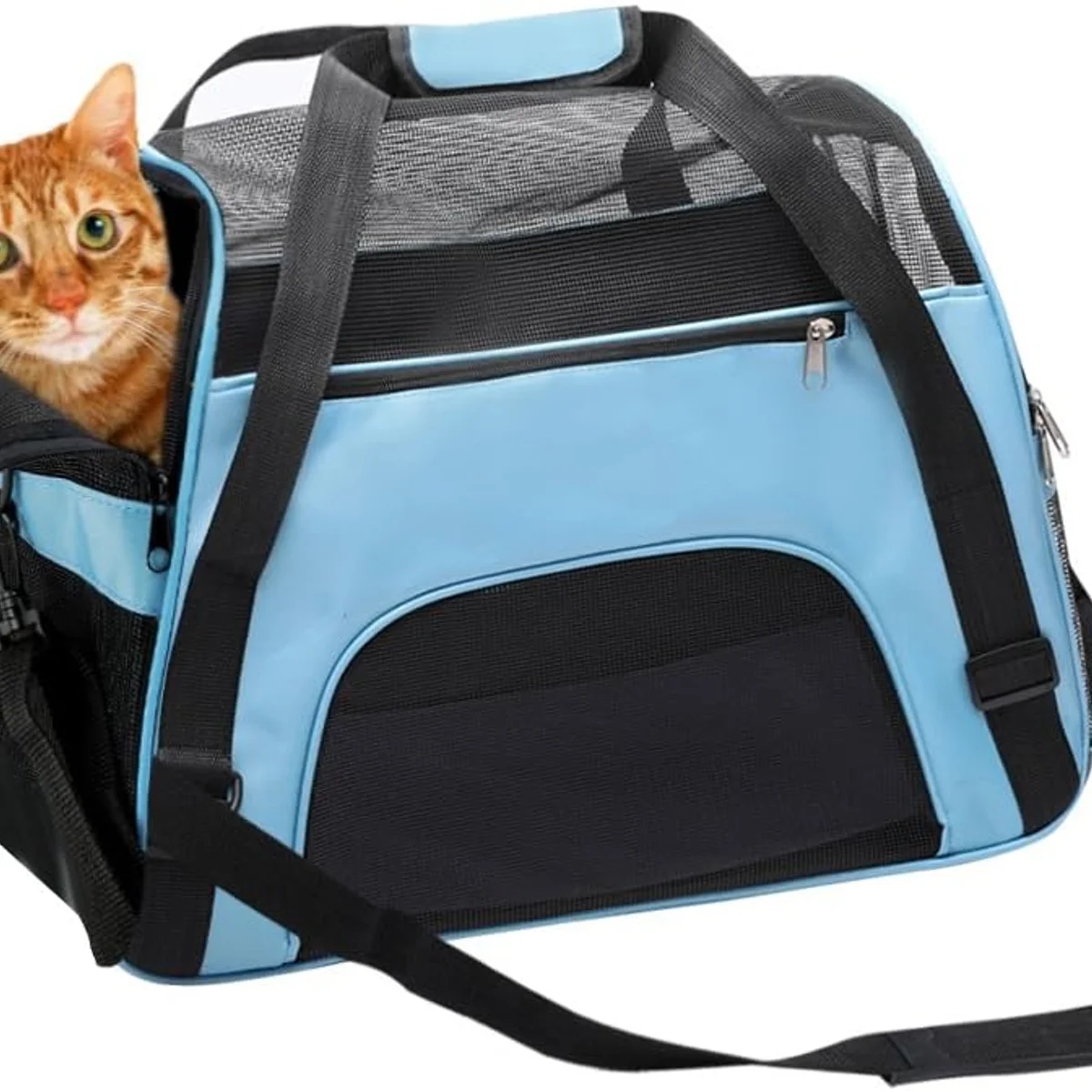
Soft-Sided Cat Carriers
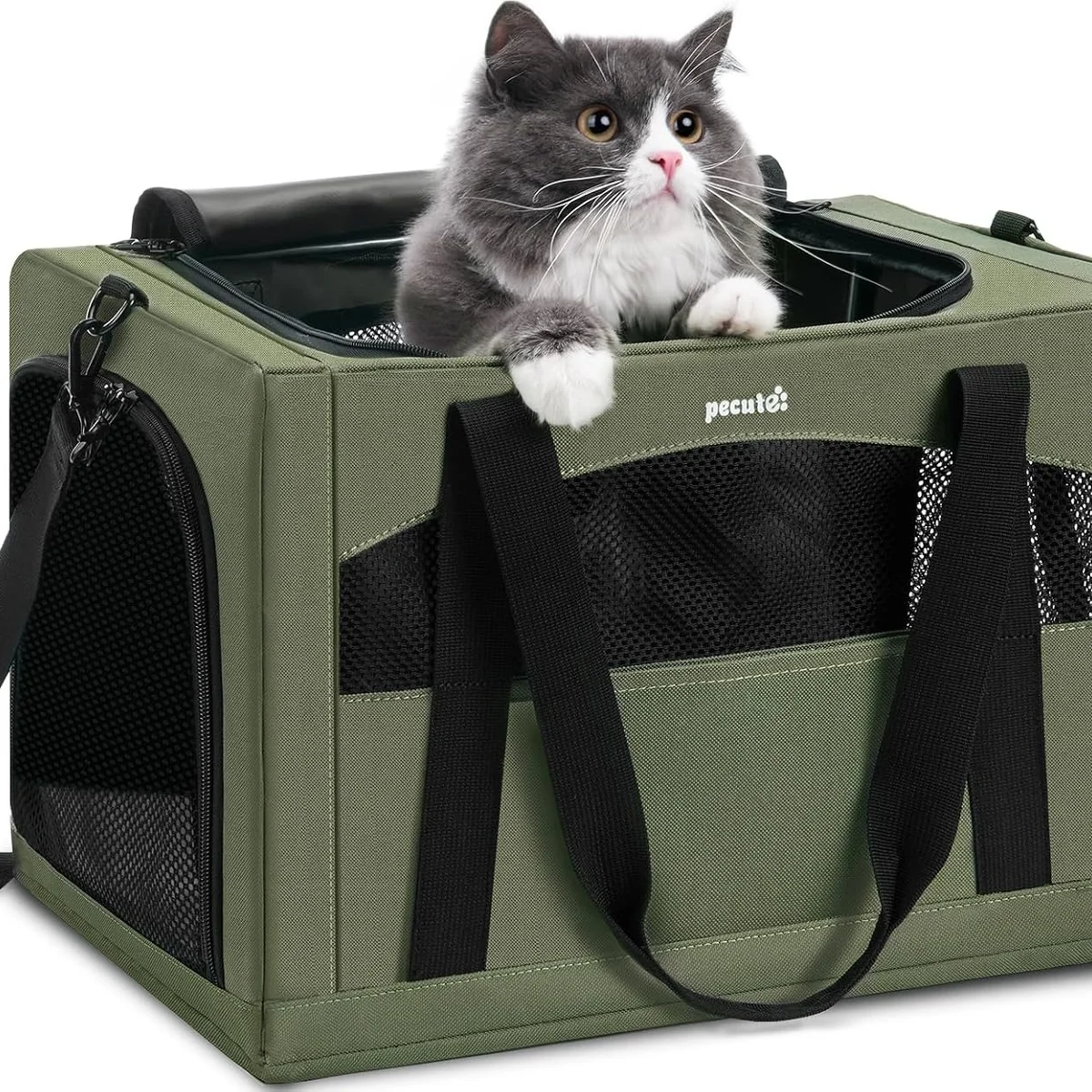
Soft-sided cat carriers fold flat for storage, weigh less to carry, and tend to feel less like a clinical box and more like a familiar bag, which suits cats who settle better somewhere that feels a bit more like a den. They're usually the more comfortable option over a longer carry, since the fabric gives slightly rather than pressing into you at fixed points the way a rigid shell can. The trade-off is structure: a soft-sided carrier can flex under a larger or more determined cat, so check the internal frame or base board (many now include one) if your cat is on the bigger side or prone to pushing against the sides. For most confident, average-sized adult cats making routine trips, this is the format most owners reach for first, and it's usually the more affordable end of the range too.
Shop Soft-Sided Cat Carriers
View all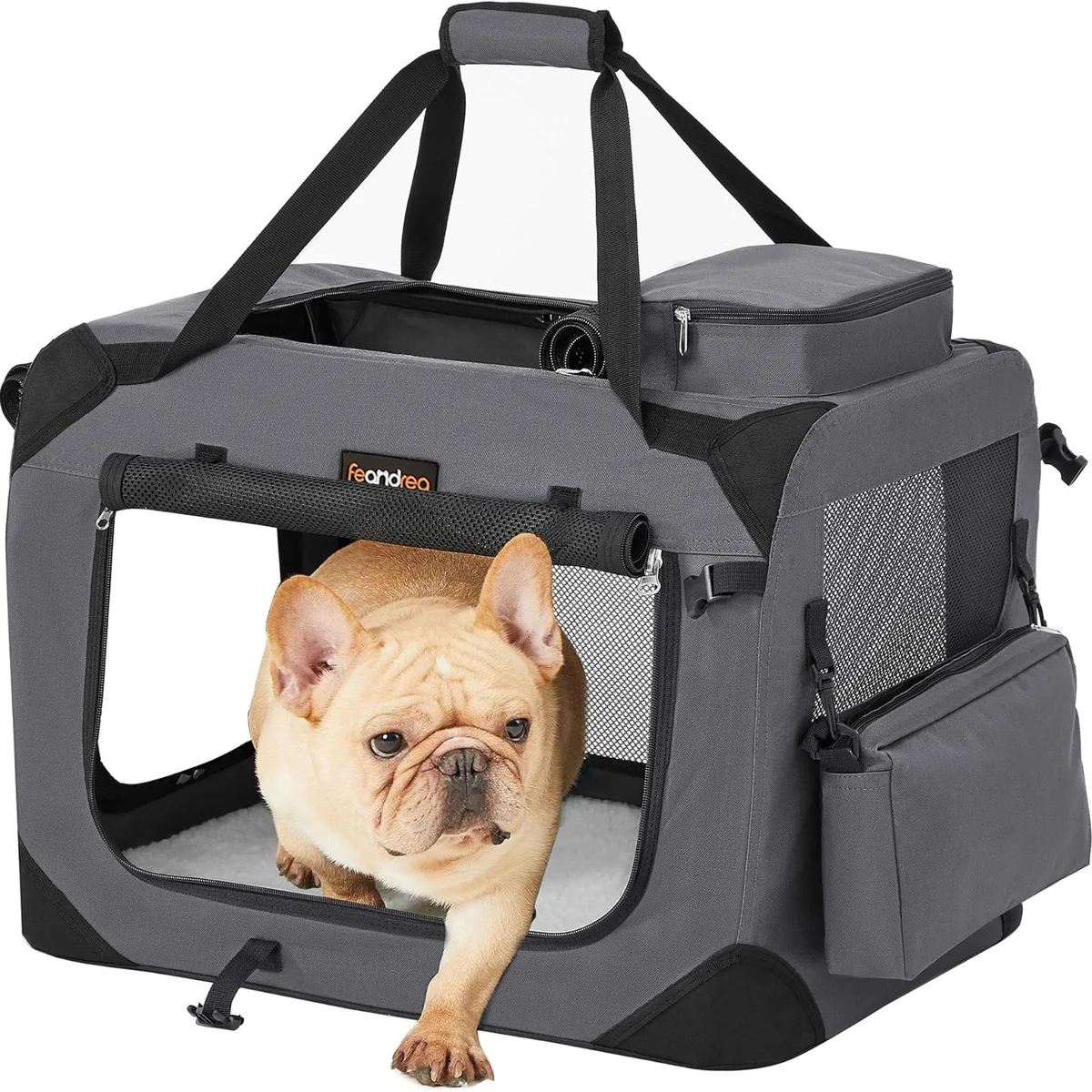
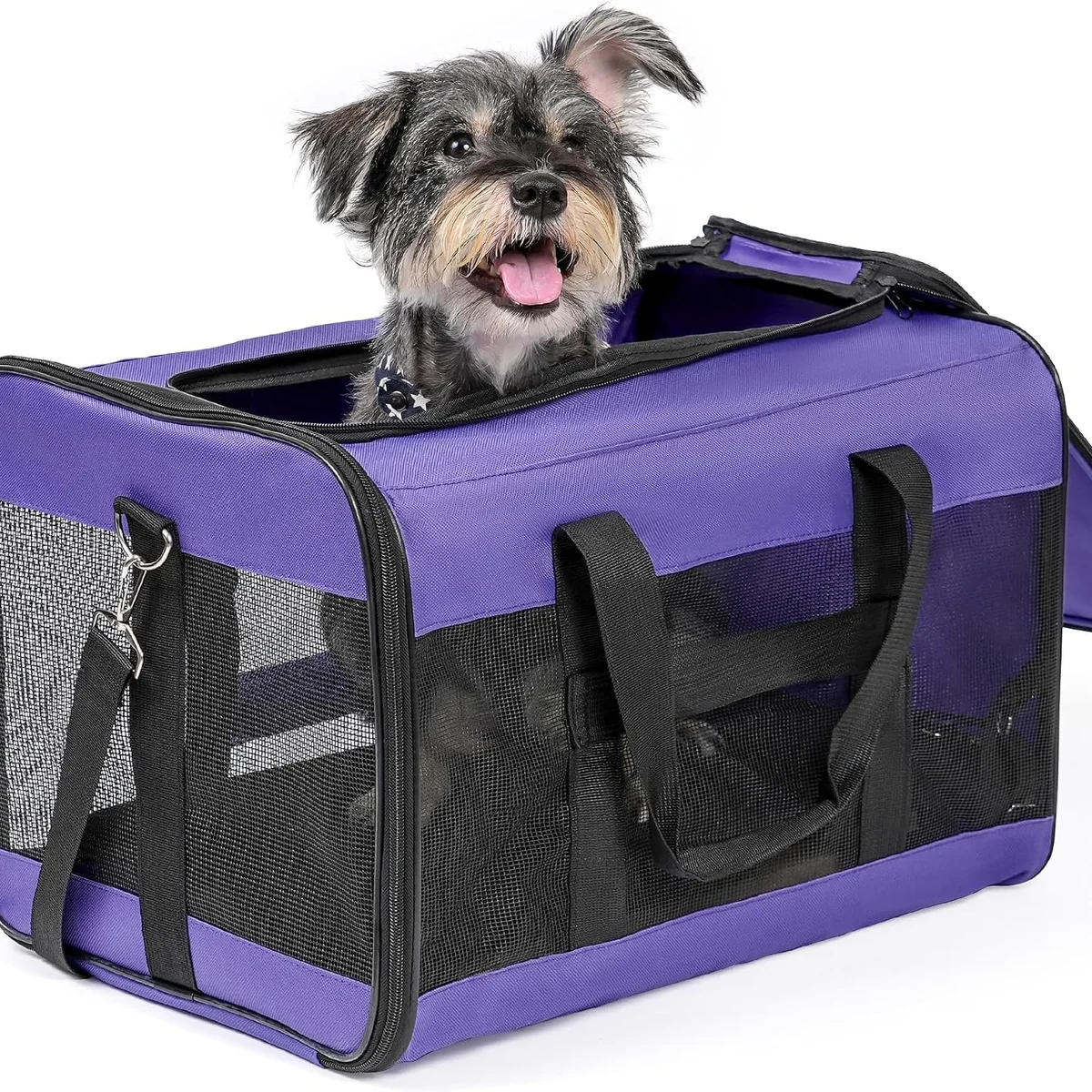
Hard-Sided Cat Carriers
Hard-sided cat carriers hold their shape completely regardless of what's happening inside or outside them, which matters for a cat who pushes hard against the walls when unsettled, or for genuine extra protection during transport. They're the closer equivalent to a travel crate: sturdier corners, a secure latching door rather than a zip, and generally easier to wipe clean after an accident, which matters more than owners expect until they've dealt with one. The trade-off runs the other way from soft-sided: more storage space needed when not in use, and a firmer feel that some cats find less reassuring than fabric sides they can press into. This format tends to suit nervous cats who feel safer somewhere solid, and larger or stronger cats where a soft-sided carrier's give becomes a liability rather than a comfort.
Cat Slings
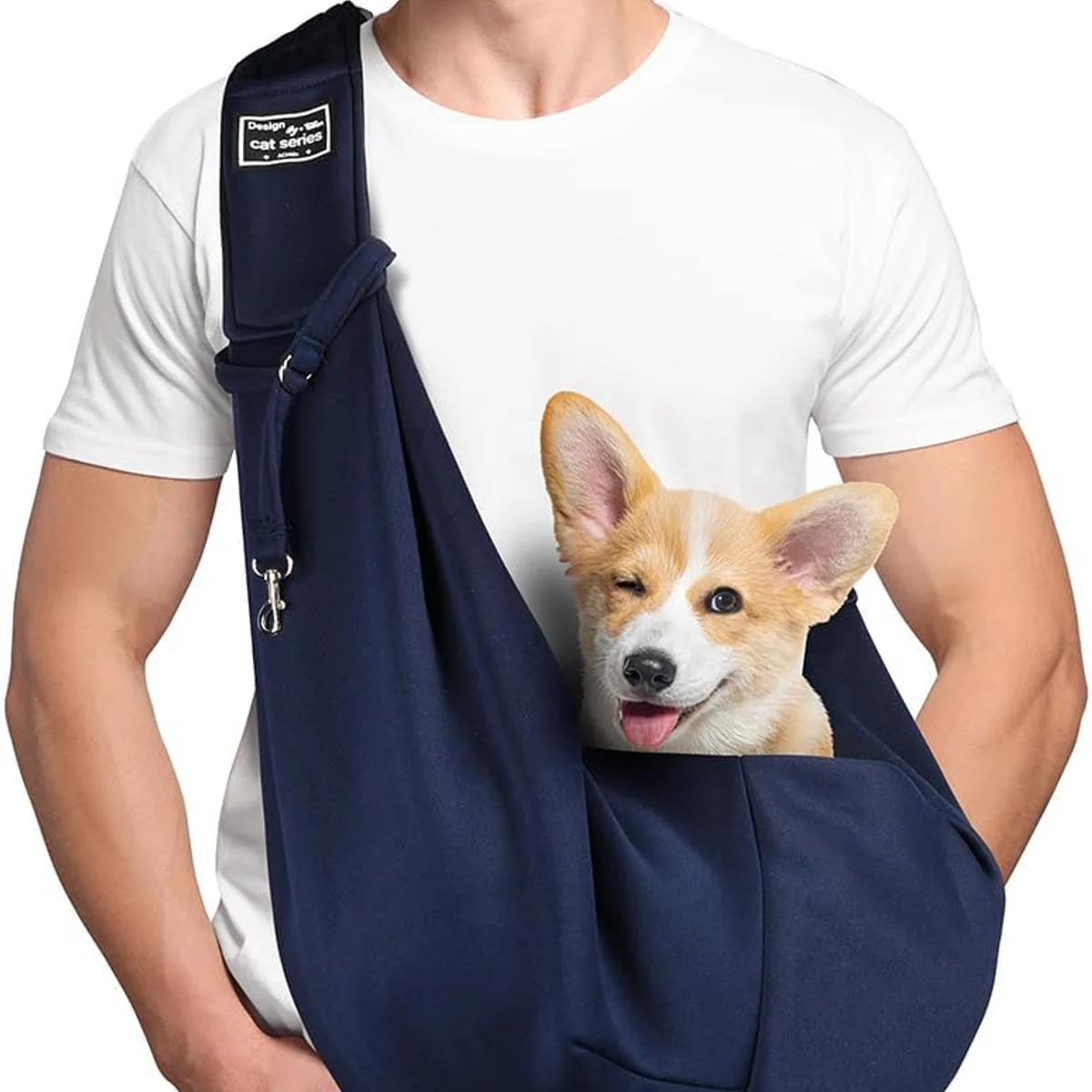
A cat sling holds your cat close against your body on a single strap rather than in a separate compartment held out in front of you, and for a cat who feels safest held close, that difference is significant. Rather than sitting inside a box a little apart from you, your cat stays against your body heat and movement, which a lot of anxious or particularly bonded cats find more settling than any amount of internal padding elsewhere. Slings work best for shorter trips and lighter cats, since all the weight runs through one shoulder rather than being distributed the way a backpack manages it, and they're not the right choice for a cat who wriggles a lot or tries to climb out, since there's less containment than a structured carrier. Check for a secure safety tether that clips to a harness or collar regardless of how settled your cat usually is, and check the strap's adjustable range fits your own height comfortably too, since a sling worn at the wrong height is awkward for you even if your cat is perfectly happy in it.
Shop Cat Slings
View all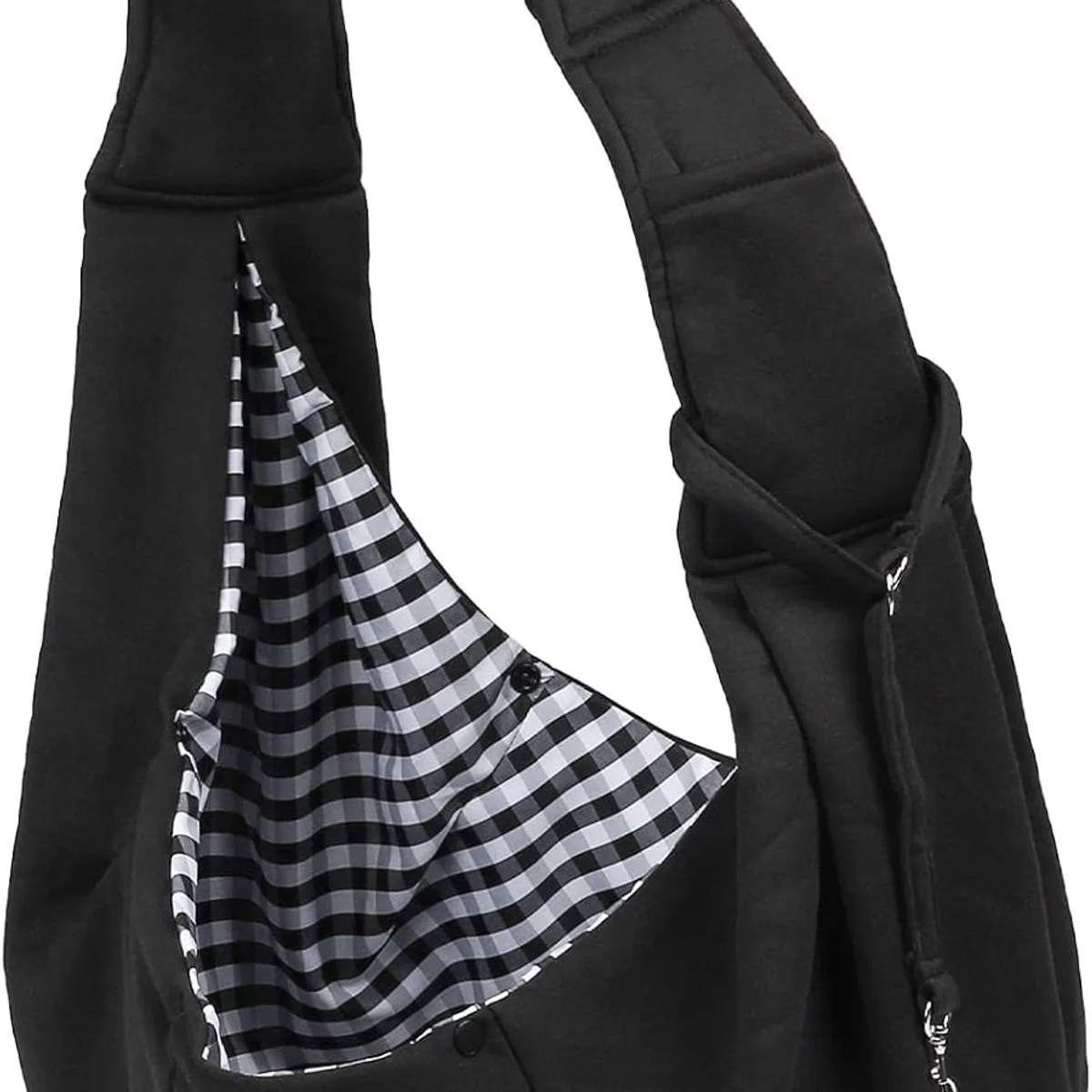
Cat Backpack Carriers
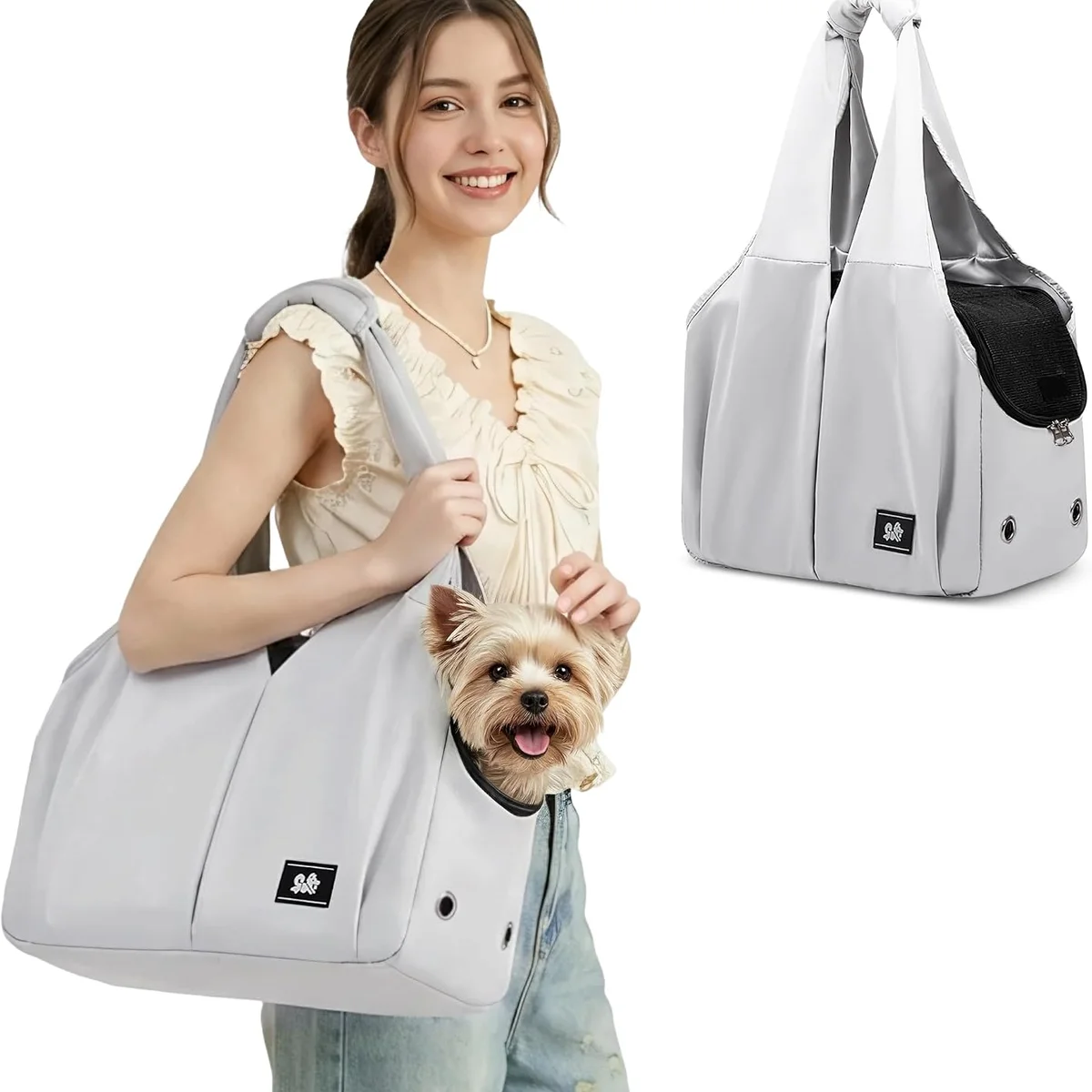
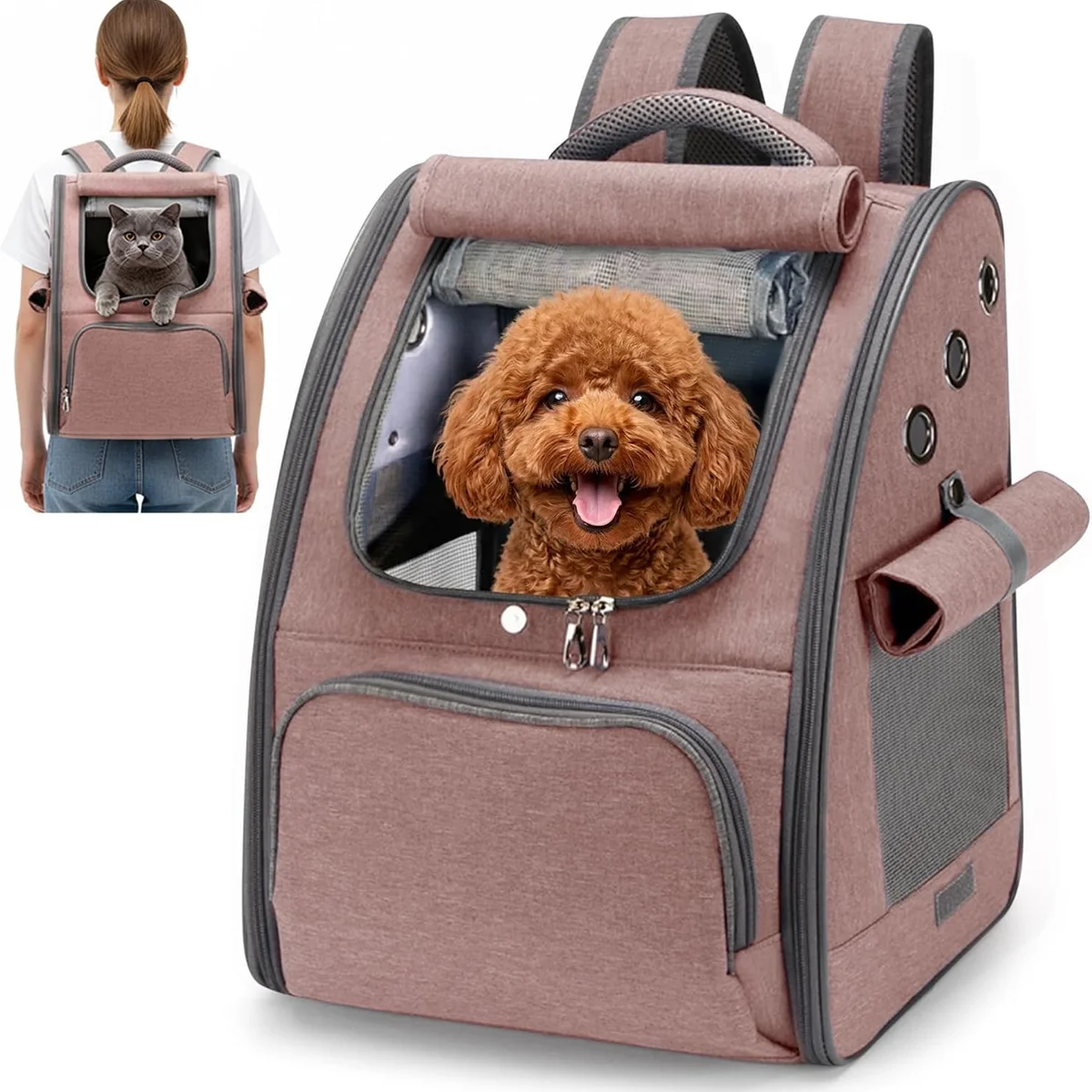
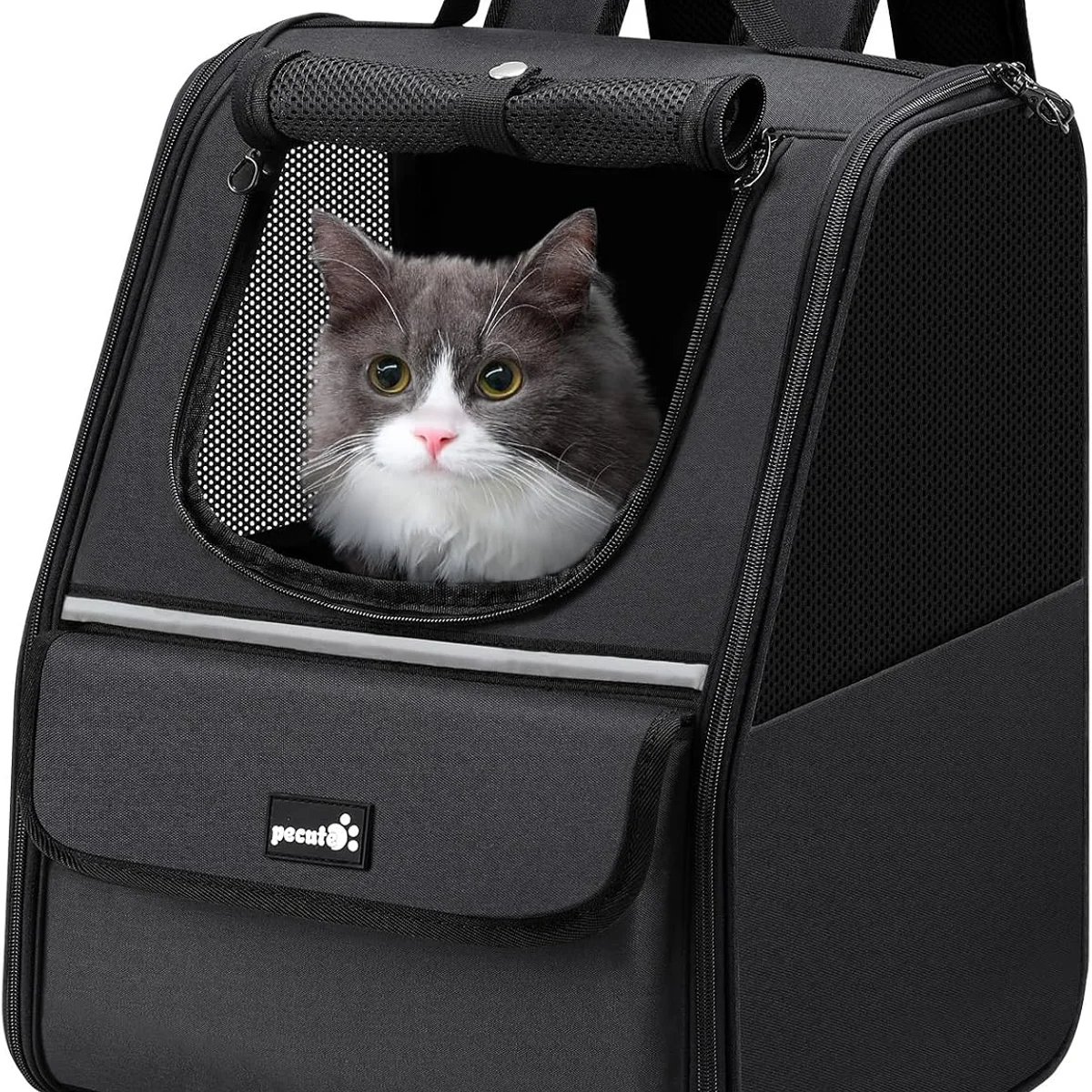
A cat backpack carrier moves the weight onto both shoulders rather than one, using the same design logic as a hiking rucksack, and it's the format most owners move to once a trip stops being a five-minute errand and becomes a proper outing. Some open at the top with mesh sides so your cat can see out and get plenty of airflow, others are more fully enclosed for a cat who's happier a bit more contained, neither is objectively better, it depends on how your own cat reacts to an open view versus a tucked-away feel. This is also the format most suited to genuinely hands-free days out, a walk, a train journey, anywhere you need both hands free while your cat travels securely on your back. Check the maximum weight rating carefully, since backpack frames are built around a specific weight range and a heavier cat needs a sturdier build than a lightweight day-trip design offers, and look for a padded hip or chest strap if you'll be wearing it for more than twenty minutes or so at a time.
Shop Cat Backpack Carriers
View all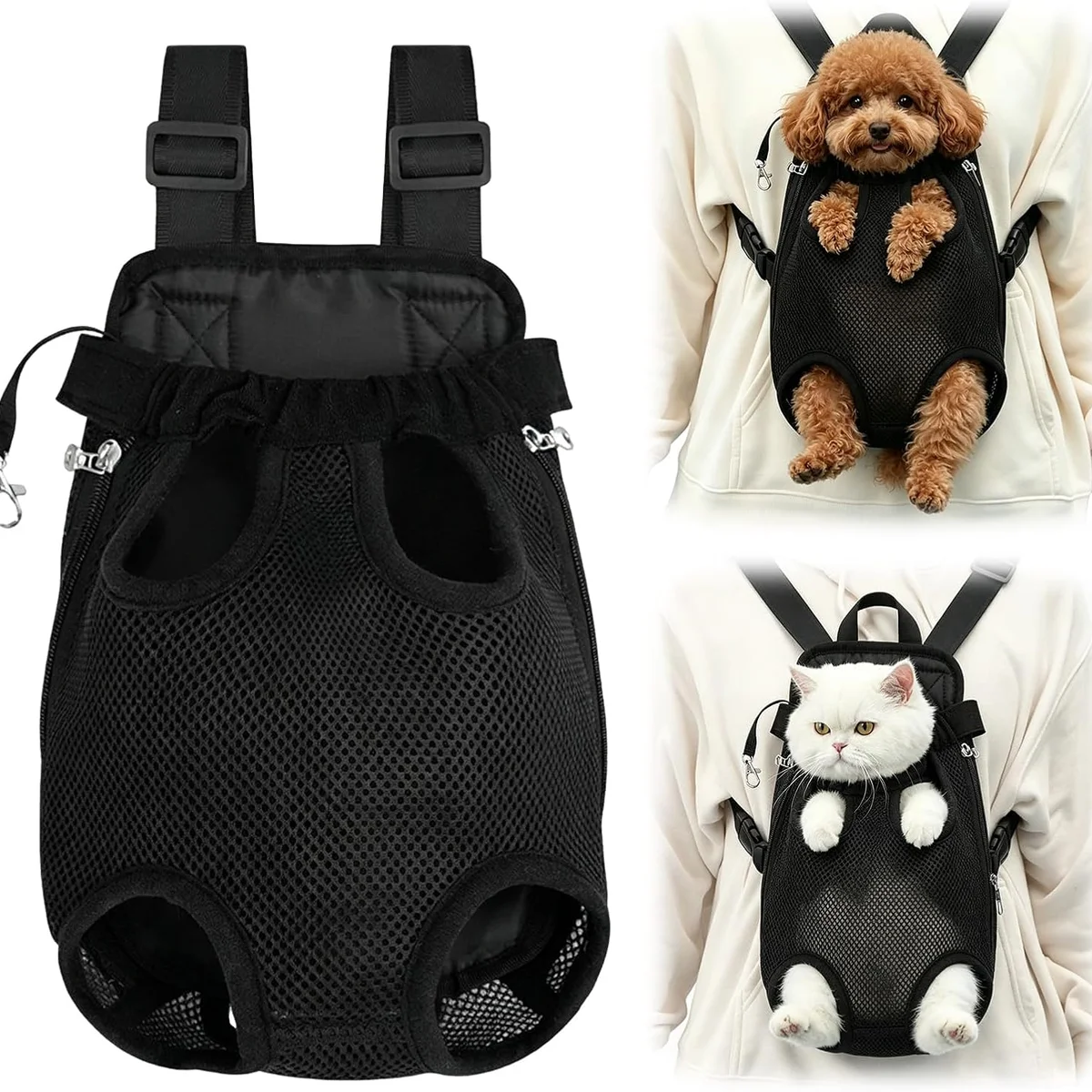
Airline Approved Cat Carriers
Flying with a cat means working to your airline's own cabin rules, not just a general sense of what looks about the right size. An airline approved cat carrier is built to a specific dimension spec, low and flat enough to slide under the seat in front of you, with enough mesh panelling to satisfy a visual check at boarding. The key word there is "your airline's", since limits genuinely differ between carriers and a carrier marketed generically as cabin-friendly can still be a few centimetres over what a specific airline allows, always confirm your airline's current published dimensions before you fly rather than relying on the label alone. This format also doubles well as a sturdy, structured option for vet visits and car journeys even if you never actually fly, since the same rigid-but-compact build that satisfies cabin rules tends to hold its shape well generally, so it's rarely a wasted purchase even for an owner who only flies with their cat occasionally.
Shop Airline Approved Cat Carriers
View all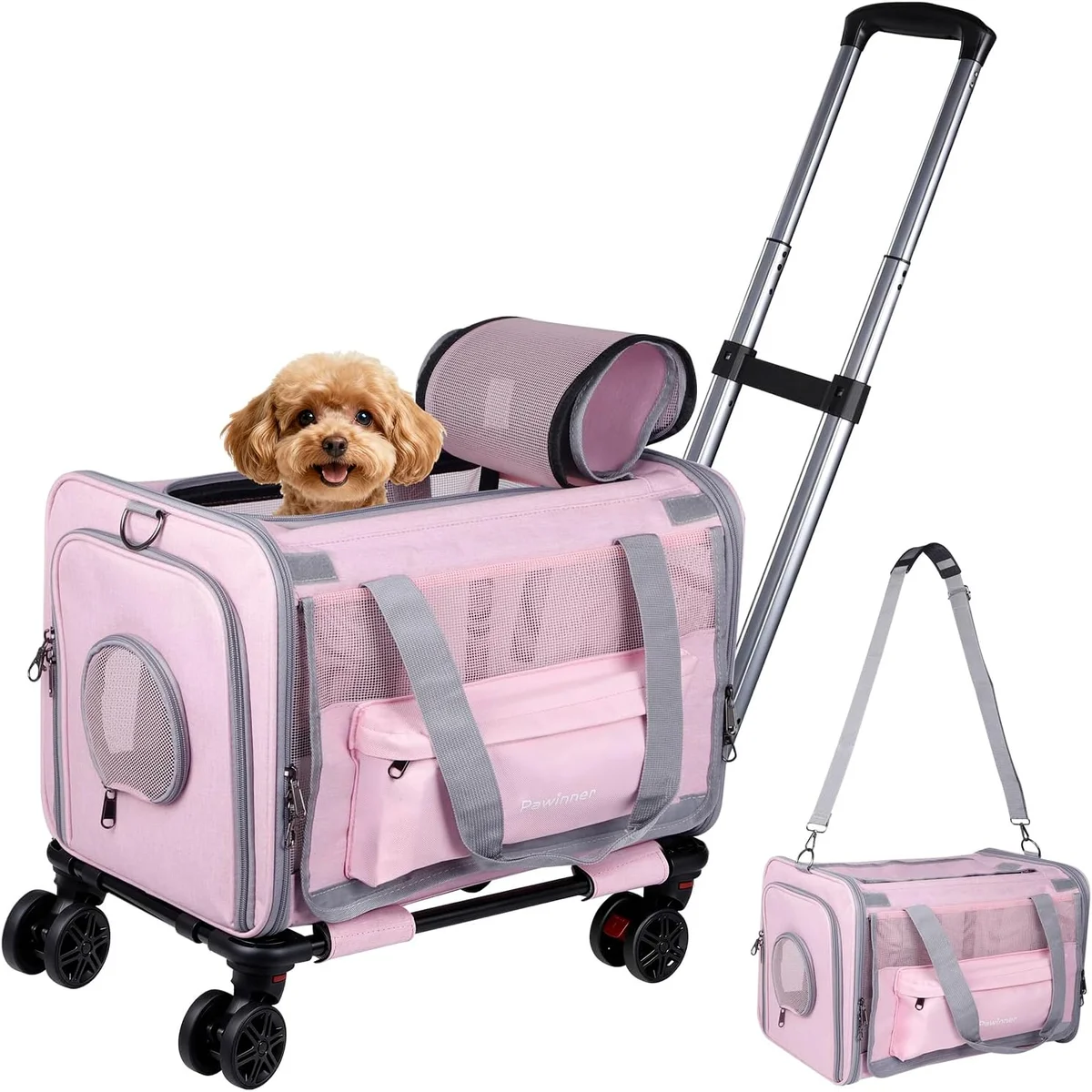
Large Cat Carriers
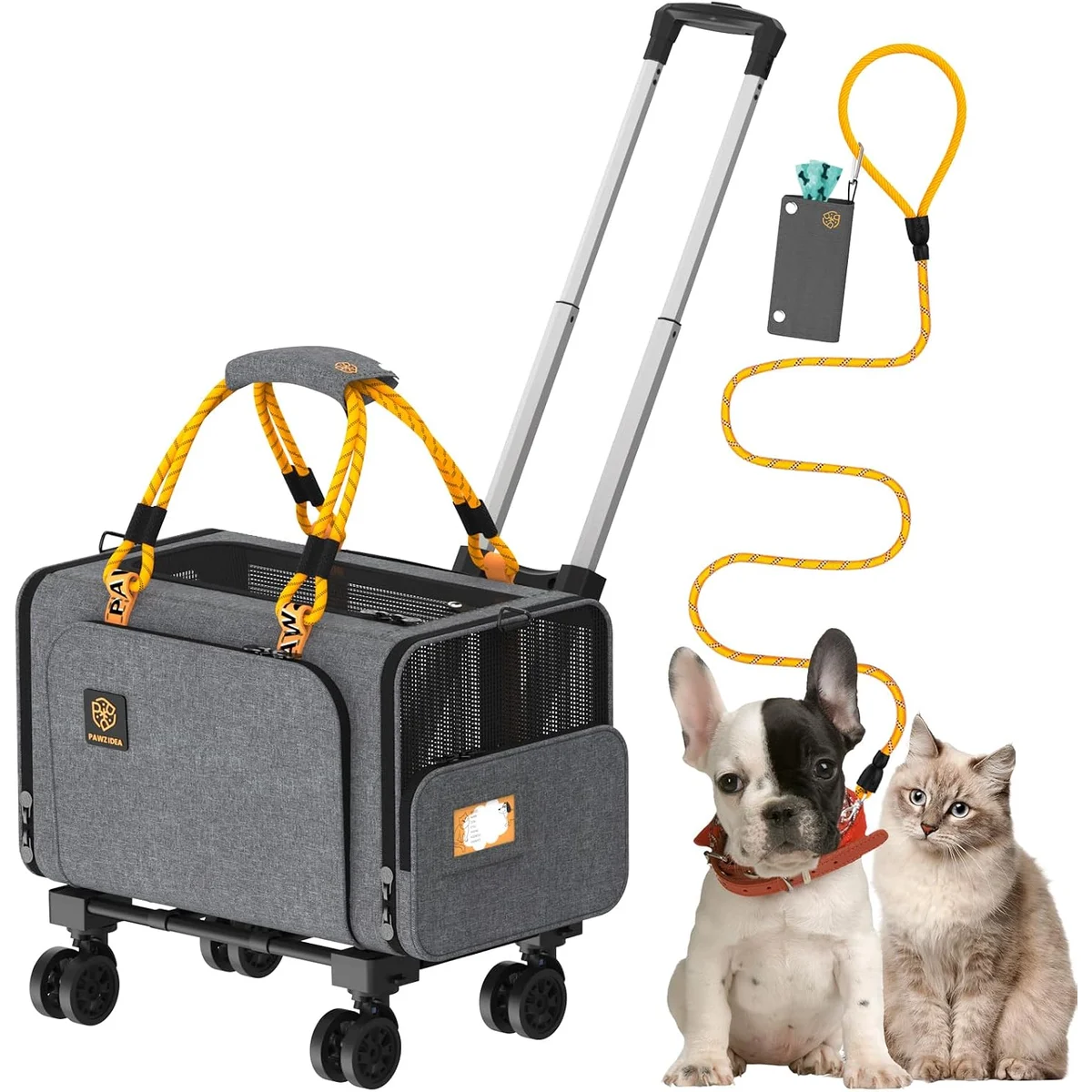
Standard carriers are usually built around an average domestic cat's proportions, which leaves genuinely large breeds like Maine Coons, or simply bigger individual cats, cramped in a space that's technically labelled "cat carrier" but isn't sized for them. A large cat carrier gives a bigger cat the same ability to stand, turn around and lie down comfortably that a standard carrier gives a smaller one, rather than asking them to fold into a compartment built for a cat two-thirds their size. Check the internal dimensions against your cat's actual measured length and height, not their breed's average, since there's real variation even within larger breeds, and check the weight capacity specifically if you're considering a soft-sided option at this size, since extra structure tends to matter more the bigger and heavier your cat is. A wider, more stable base also matters more here than on a standard-sized carrier, since a bigger cat shifting their weight can make a narrow base feel unsteady in a way it wouldn't with a lighter cat inside.
Shop Large Cat Carriers
View all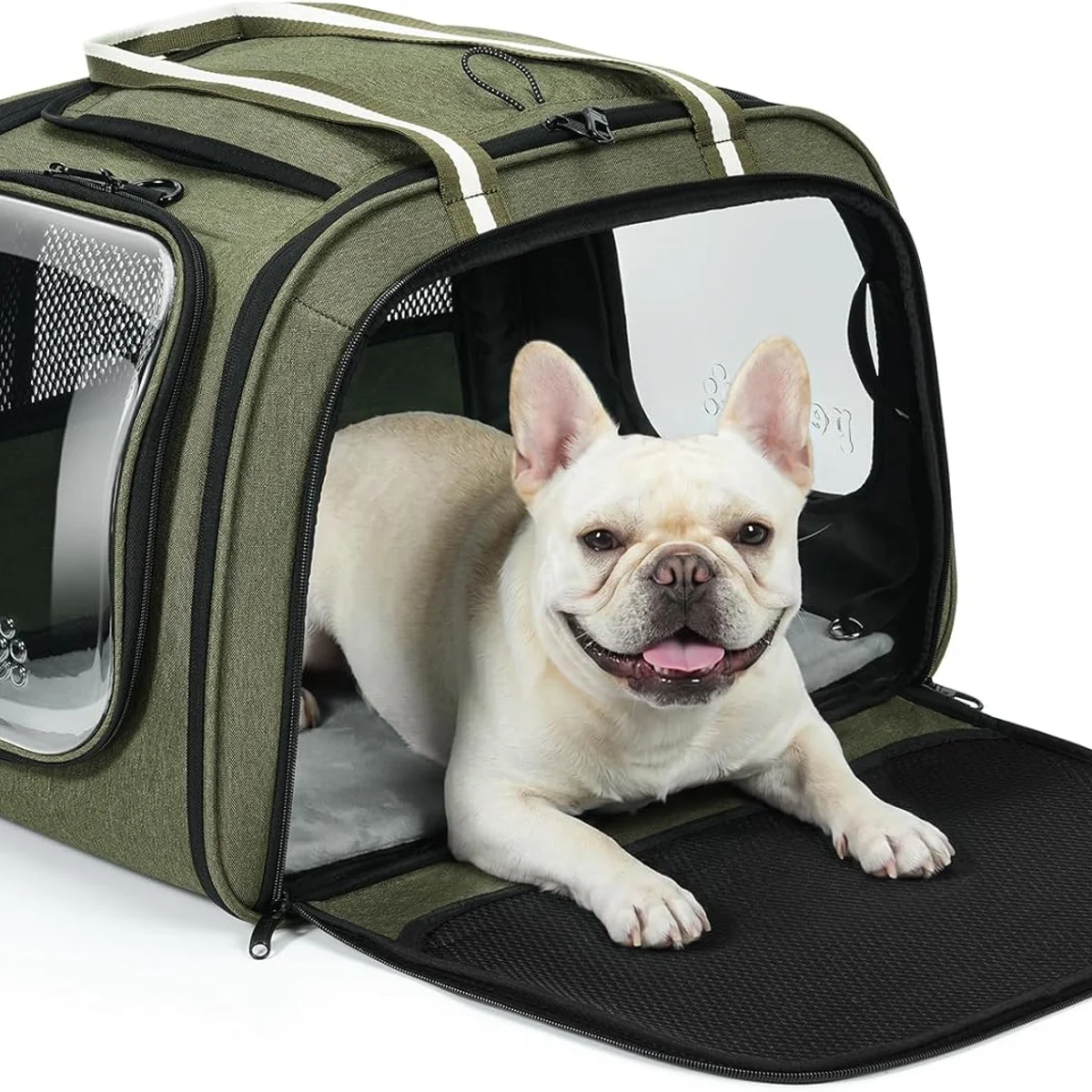
Getting the Size Right, Whichever Format You Choose
Measure before you buy rather than going by the category name alone. Measure your cat from nose to the base of the tail for length, floor to the top of the head or ears for height, and across the shoulders for width, then check these against the carrier's actual internal dimensions rather than assuming "cat carrier" means one standard size. A slightly snugger fit is usually more reassuring than a very loose one for most cats, since an enclosed space that moves with them tends to feel calmer than one they can slide around in, but snug should never mean cramped. Always check the maximum weight capacity too, since this can be the limiting factor even when the internal dimensions look right on paper, particularly on soft-sided and sling formats where the fabric or strap, not just the floor space, is doing the structural work.
How Much Should a Cat Carrier Cost?
Price mostly tracks structure and format rather than brand alone. Simple soft-sided carriers tend to sit at the more affordable end of the range, since they use less material and no rigid components. Hard-sided carriers and anything built to a specific spec, like an airline approved design, typically cost more, reflecting the reinforced frame or shell and tighter dimensional tolerances involved. Backpacks and slings vary widely depending on padding, strap quality and build, a basic day-trip backpack costs noticeably less than one built with a padded hip belt and weather-resistant fabric for regular longer outings. It's rarely worth buying the cheapest option in a format that doesn't suit your cat just to save money, since a carrier your cat refuses to settle in, or one that doesn't hold up to regular use, usually ends up replaced within a year anyway.
Preparing Your Cat for Their First Journey
Whichever carrier you choose, how you introduce it matters almost as much as the carrier itself. Leave it out at home for a week or two before it's actually needed, with a familiar blanket inside and a few treats scattered near the entrance, rather than only bringing it out right before a stressful trip. Cats build strong associations quickly, and a carrier that only appears before something unsettling happens becomes a signal in itself. We've written a full guide on helping a nervous cat get used to a carrier if your cat is particularly anxious about this, covering everything from choosing an easier-to-load design to what actually helps on travel day itself.
Keeping Your Carrier Clean and Ready
A carrier that's ready to go without a last-minute scramble makes any trip easier, so it's worth a quick check every so often rather than only after something's gone wrong. Wipe down hard-sided carriers with a pet-safe cleaner and check the door latch still closes securely, and machine wash removable liners or bedding on a regular cycle if the manufacturer's care label allows it. For soft-sided carriers, check the zips run smoothly and the seams haven't started to pull apart, since this is usually the first sign a carrier needs replacing rather than just cleaning. Keeping the carrier accessible, not folded away at the back of a cupboard, also means it stays a familiar object to your cat rather than something that only reappears before a stressful trip.
Finding the Right Carrier for Your Cat
There's no single best cat carrier, only the right one for your particular cat's size, temperament and the kind of trips you're actually making. Start with size and material, then let your cat's personality, confident or nervous, calm or wriggly, and your own routine, a quick vet trip versus a proper day out, narrow it down from there. Browse our full cat carriers range to compare every format side by side, or jump straight to whichever category above best matches your cat.
Before You Buy: Quick Checklist
- Measured your cat's length, height and width against the carrier's internal dimensions
- Checked the maximum weight capacity, not just whether your cat fits inside
- Confirmed the opening style suits how easily your cat can be lifted in
- Checked for mesh ventilation on at least two sides
- If flying, checked your specific airline's current cabin dimension limits
- Considered whether your cat's temperament suits a soft, structured, or hands-free format
Soft-Sided vs Hard-Sided vs Sling vs Backpack
| Format | Best for | Hands-free? | Structure |
|---|---|---|---|
| Soft-sided | Confident cats, routine trips | No | Flexes slightly |
| Hard-sided | Nervous or larger cats, vet visits | No | Fully rigid |
| Sling | Very bonded, anxious cats, short trips | Partially | Minimal |
| Backpack | Longer outings, hands-free days out | Yes | Varies by design |
Common Mistakes to Avoid
- Buying by breed average rather than your cat's actual measured dimensions
- Choosing a carrier with only a narrow front door for a nervous or reluctant cat
- Assuming "airline approved" is enough without checking your specific airline's own limits
- Overlooking the weight rating on a soft-sided or sling carrier for a heavier cat
- Buying a hands-free format for a cat who wriggles a lot or tries to climb out
Frequently Asked Questions
Written by
RebeccaPet Care Specialist & Pet Writer
Rebecca is a pet-care specialist and experienced pet writer with a practical background in the pet retail sector. She creates clear, useful guides covering pet travel, carriers and everyday pet-care considerations.
Reviewed by
DanielPet Care Reviewer & Editorial Reviewer
Daniel reviews Pet Carrier content for clarity, practical usefulness and responsible presentation, helping readers understand pet-care and travel guidance.


